“In the whole celestial sphere, the number of stars bright enough to be seen with the naked eye is only from 6,000 to 7,000, whereas, the number visible in the great Lick telescope is probably 100,000,000, and Professor Young makes the remark that it shows stars so faint that it would take more than 30,000 to make a star equal to the faintest that can be seen with the naked eye.
As to the number of these suns and systems, no astronomer can form a conception, for there are millions of suns with their systems within the reach of a powerful telescope. We are told that there are places in the Milky Way where the stars are so numerous that within the field of the telescope they appear so close together and so small that it is impossible to count them; and if within the field of the telescope the number is so great that they cannot be counted, what can we reasonably suppose to be the number comprising our universe?
But if our mind palls in considering the immensity of the universe, yet we must rally our forces, and, as the angel said to Daniel, “Be strong, yea, be strong”, for we have been casting a survey over our own territory only; comparatively, our own dooryard. We turn the most powerful telescope into space beyond the limit of what is known as our universe, and under its powerful eye, little specks of nebulæ form themselves into universes, remote from ours, probably by millions of light-years.
In order to aid the mind in its marvelous flight through endless space, we append here from Flammarion’s “Wonders of Science” a few illustrations of the appearance of these far-off universes, which are called nebulæ.

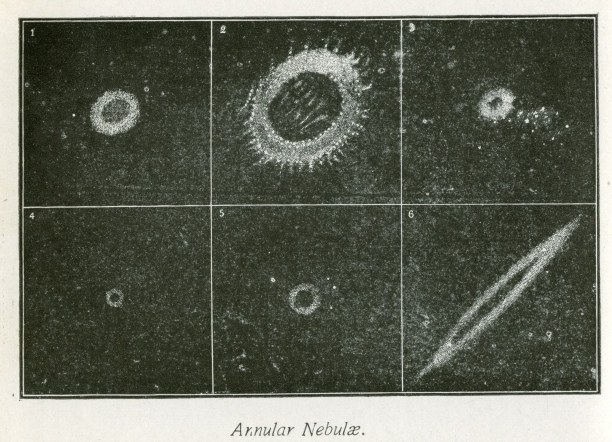

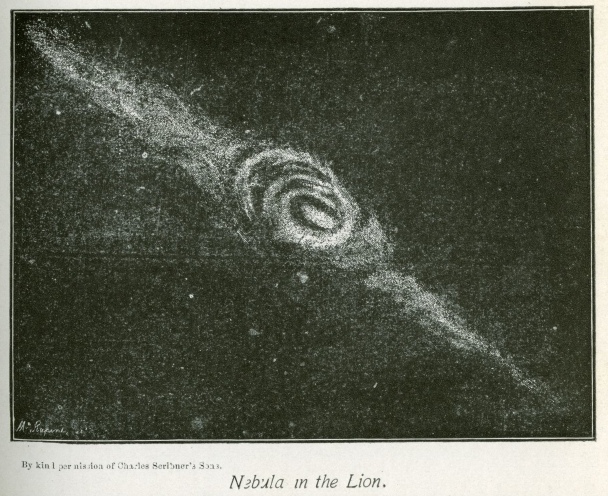
Here is our universe with suns and systems of worlds so remote that it would take tens of thousands of years for a ray of light travelling at the rate of 186,414 miles per second, to reach the earth. Yet it is only one sphere floating in limitless space, and beyond it there are other universes with numberless worlds, and beyond these, others, and so on without limit to space or to numbers of systems of worlds, or of universes. If there is no limit to space, then there is no conceiving the numbers of universes filling space; and here we must stop, because of the inability of mind to grasp infinity.”
Hiram Butler
 The Mark Of God: Understanding Your "I AM Presence"